
Access measured
Gate width alone is not enough. Check turns, overhead clearance, surfaces and the loading route.
Groundwork starts with the right facts
Clarify access, levels, ground conditions, buried services and spoil before comparing the practical next step for your site.
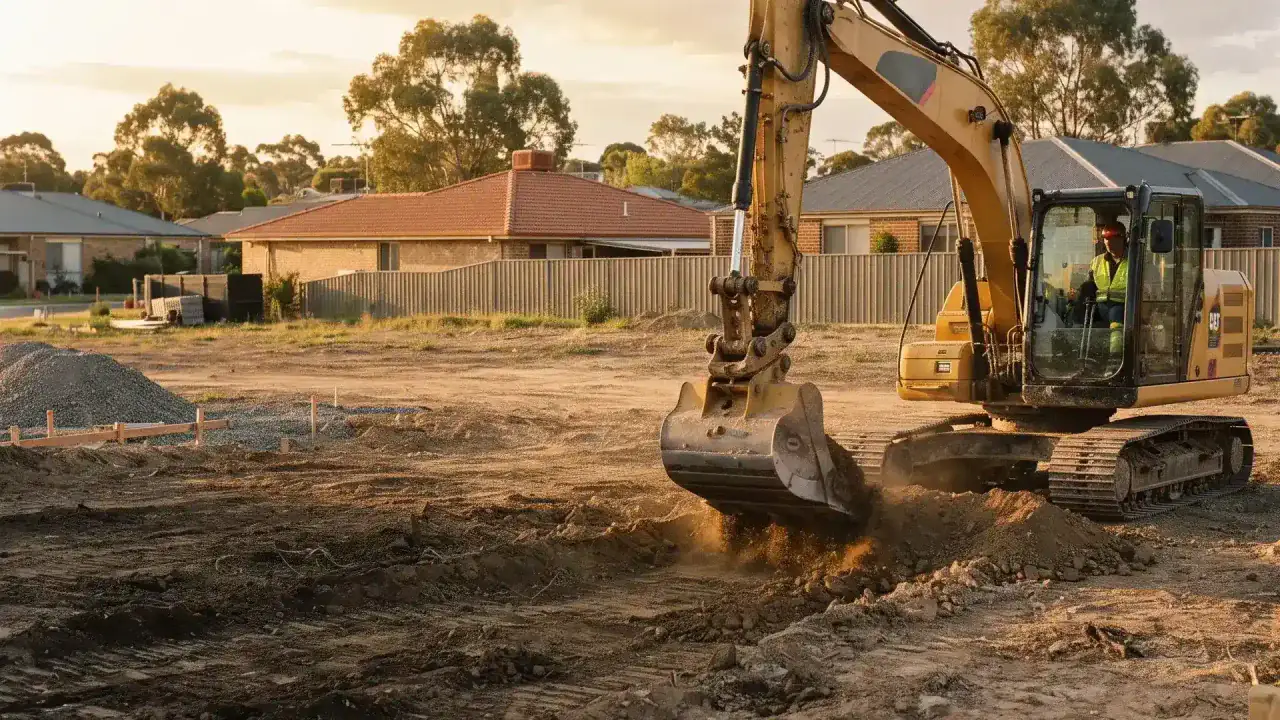
Six practical work types
The useful starting point is not a machine name. It is the outcome, dimensions, access path, designed levels, known services, ground condition and plan for material. Each service page explains the decisions and boundaries that matter before work is reviewed.
Survey-led cuts and building-pad preparation for homes, sheds and extensions.
Service trenches, stormwater shaping and drainage excavation planned around buried assets.
Vegetation, debris and unsuitable surface material cleared before construction or landscaping.
Loading, separation and lawful cartage of clean spoil, rubble and excavated material.
Excavation, grading and compacted base preparation for driveways, sheds and hardstand areas.
Compact-plant excavation for pools, courtyards and established properties with limited access.
Gate width alone is not enough. Check turns, overhead clearance, surfaces and the loading route.
Sand, reactive clay, fill and rock change plant, stability, time and disposal assumptions.
Use current asset information and site-specific locating before excavation starts.
Separate excavation, cartage, materials, testing, approvals and downstream trade responsibilities.
A clearer first review
Include the suburb, intended result, approximate dimensions, access measurements, known ground conditions, plans and photos. Engineering, approvals, contractor selection and the final written quote remain separate decisions.
Prepare your enquiry
Ready to describe the site?
Share the outcome, access and location so the next review starts with useful facts.